Vendor Advice
5 Red Flags to Look For in a Wedding Vendor Contract Before You Sign
September 29, 2026
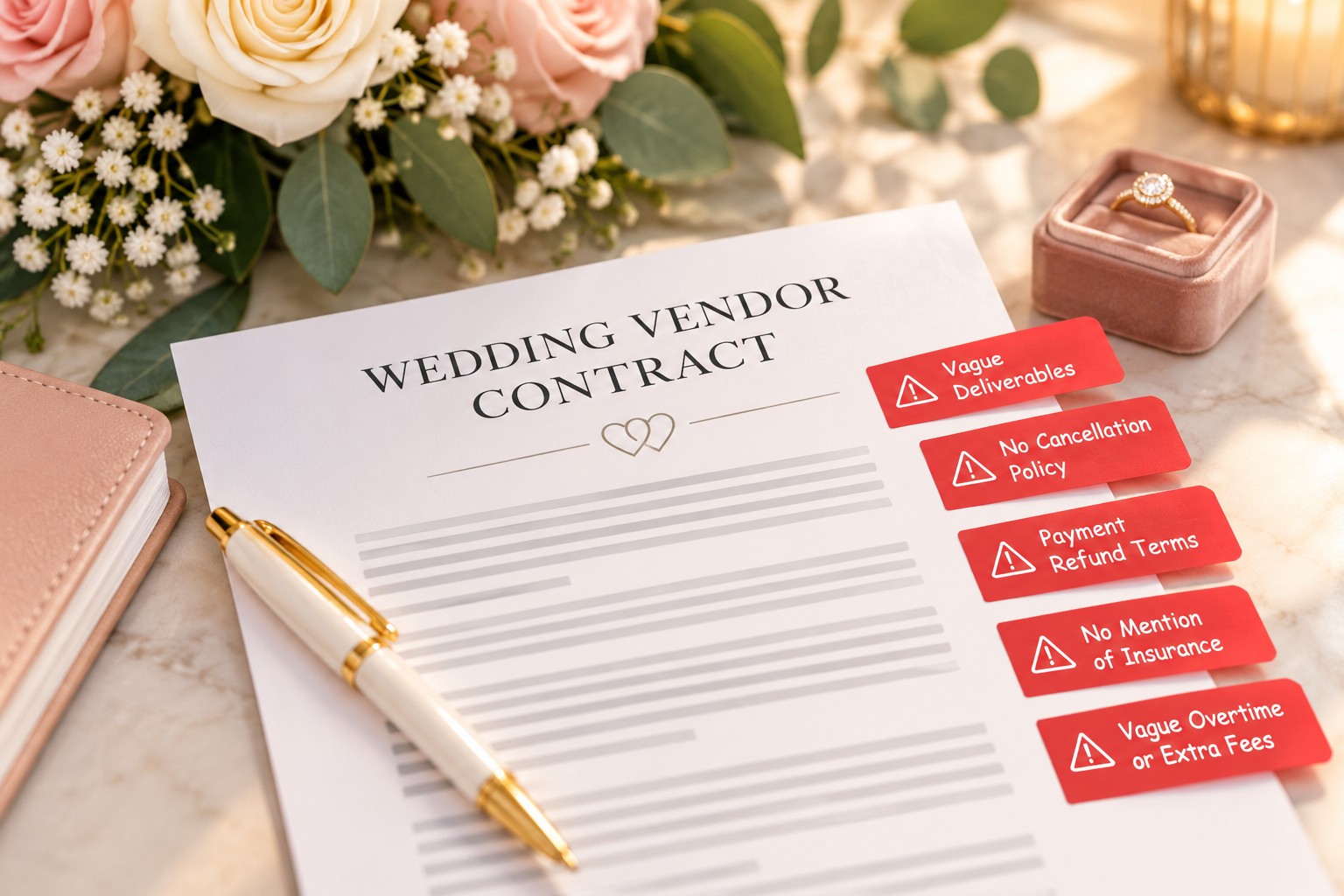
By the time a contract lands in your inbox, you've probably already fallen for the vendor. You loved their portfolio, the consultation went well, and you're ready to send the deposit and cross one more thing off the list.
That's exactly the moment contracts are designed to be signed quickly — and exactly the moment it's worth slowing down. A wedding vendor contract is written by the vendor, for the vendor. That doesn't make every vendor untrustworthy. It just means nobody is looking out for your side of the deal unless you are.
Here are five things worth checking before you sign anything.
1. Vague deliverables
"Photography services for your wedding day" is not a deliverable. It's a sentence.
A contract that doesn't specify exactly what you're getting leaves too much room for disappointment later — and no real way to hold anyone accountable when it happens. Before you sign, the contract should spell out:
- How many hours of coverage, specifically
- How many edited photos or videos you'll receive, and roughly when
- Whether a second shooter or assistant is included
- What happens if the event runs long
If a contract is vague on any of these, that's not an oversight — it's a gap that benefits whoever wrote the contract, not you. Ask for specifics in writing before you sign, not "we'll figure it out closer to the date."
2. No cancellation or postponement policy
Weddings get postponed. Venues close. Vendors have emergencies. None of that is anyone's fault — but a contract that doesn't say what happens when it happens is a contract that leaves you exposed.
Look specifically for:
- What happens to your deposit if you need to cancel or postpone
- What happens if the vendor cancels — do you get a refund, a replacement vendor, or nothing at all?
- Whether there's a difference between a full cancellation and a date change
If this section is missing entirely, don't assume it means "standard terms apply." It usually means there are no terms, and you're the one holding the risk.
3. A payment schedule with no refund terms
Most contracts ask for a deposit up front, then additional payments as the date approaches. That part's normal. What's worth watching for is whether the contract ever says what's refundable and what isn't.
"Non-refundable deposit" is common and often reasonable — vendors turn away other clients once they've booked your date. But a contract that makes every single payment non-refundable, including ones made months before the wedding, is worth a conversation. Ask directly: if I need to cancel six months out, what do I get back?
4. No mention of insurance
Most reputable venues actually require vendors to carry liability insurance — so a vendor contract that never mentions it is worth a second look. It can be a sign of a newer or less established business, which isn't automatically a dealbreaker, but it's information you want before the wedding, not the week of.
A simple ask covers this: "Can you send me your certificate of liability insurance?" A vendor who's already covered will have this ready in minutes.
5. Vague overtime or "extra fee" language
Watch for phrases like "additional hours billed at our discretion" or "extra services may incur additional charges." These aren't automatically bad — many vendors do charge for overtime — but if the rate isn't written down, you have no way to know what you're agreeing to until the bill shows up.
Before signing, get a specific number: what's the hourly overtime rate, and is there anything else that could add cost later (travel fees outside a certain radius, printing costs, meal costs for the vendor's team)? If it's not in the contract, get it in writing separately.
The pattern behind all five
None of these red flags mean a vendor is trying to take advantage of you. Most of the time, it's just a generic contract template that was never tailored to your event. But "probably fine" isn't the same as "in writing" — and a deposit you can't get back is the wrong place to find out the difference.
If reading through a contract line by line isn't how you want to spend an evening, that's exactly the gap Mosika's contract analysis was built for — upload any vendor contract and it flags missing deliverables, cancellation terms, and payment risk before you sign, at no cost. It's part of the free plan, permanently, because this is the part that shouldn't come with a price tag.